Iowans are losing their life’s savings to scammers using crypto ATMs to separate people from their money. A bill aims to regulate these kiosks in hopes of preventing future losses.
A story keeps repeating. Iowans—particularly the elderly—get a call. The person on the phone says it’s their grandson. They’ve just been arrested and need someone to post bail. They say the jail has a “safety locker” at a nearby convenience store. Their grandson says insert the cash and he’ll be free to go. Thousands of dollars, sometimes tens of thousands, get inserted into the machine. And before anyone’s the wiser, the money is gone.
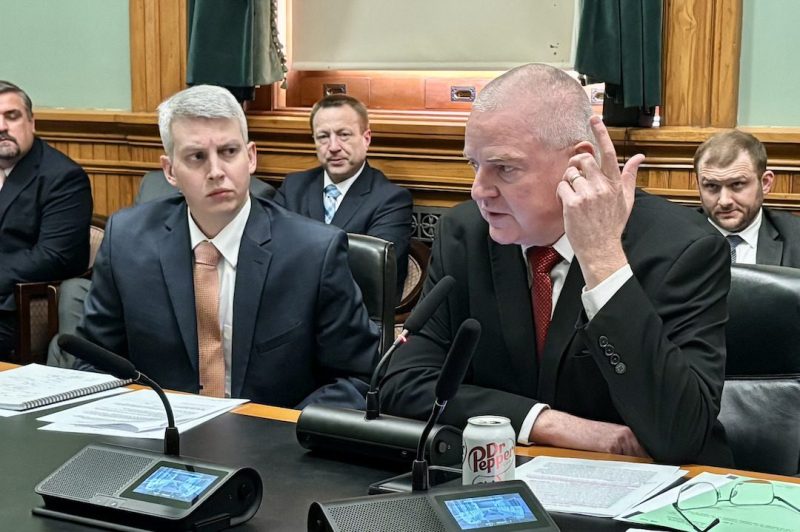
Sometimes called the “grandson scam,” it’s one in a genre of scams that state Sen. Charlie McClintock wants to do something about. McClintock, a Republican from Alburnett, said it’s difficult for law enforcement to investigate these crimes as they often involve international operators outside the jurisdiction of investigators.
“That’s unacceptable in Iowa. I don’t care if it happens one time or it’s happened hundreds of times, it’s still fraud,” McClintock told Iowa Starting Line.
The scams revolve around so-called Bitcoin ATMs or kiosks, devices designed to allow consumers to buy and sell cryptocurrencies. These machines, often placed in convenience stores and gas stations, typically lack robust identity verification, making them attractive tools for scammers who convince victims to deposit cash under false pretenses.
McClintock’s bill aims to shrink the size of transactions possible at these kiosks, potentially limiting the harm. It imposes a $1,000 daily transaction limit, capping fees at $5 or 15% (whichever is greater). It also mandates clear disclosures and detailed receipts for all transactions at these kiosks.
“If we can’t prosecute, then we have to regulate it. (The bill) basically makes it not worth it for them,” McClintock said.
In recent years, Bitcoin ATM company CoinFlip has installed nearly 50 of these machines across the state. And while some of the transactions are legal, recent consumer fraud data shows a problem is growing.
The US Federal Trade Commission has called them “payment portal for scammers.” The FTC Consumer Sentinel Networks tracks data on money lost to fraud transactions at crypto ATMs. In 2020, an estimated $12 million was lost to these transactions. By 2023, $114 million was lost to fraud—an 850% increase. Since this data requires victims to report instances of fraud, it does not reflect the full extent of fraud loss at these kiosks.
McClintock said the effort is not meant to curtail innovation in the crypto space, but to add some protection for consumers.
The bill is still at the earliest point of consideration. With passage out of subcommittee, it is now available for consideration at the committee level. It would need to pass through a committee and receive approval by both chambers and the governor before becoming law.